The establishment of a legal encumbrance on land, commonly known as a "vecné bremeno" (real burden) in Slovak law, particularly concerning the right to use a property, presents a complex legal landscape. While Section 135c of the Civil Code appears straightforward at first glance, its application in scenarios where a landowner seeks compensation solely for "unjust enrichment" from a property user raises a multitude of questions. This article delves into these intricacies, exploring the legal nature of such claims, the distinction between damage and unjust enrichment, and the implications of prescription periods.
The Nature of Claims for Land Use Compensation
One of the primary questions arising in these situations is whether a landowner is entitled to claim compensation for the use of their property independently of proceedings under Section 135c of the Civil Code. This section typically deals with the legal status of structures built on someone else's land. However, the discussion often extends to the landowner's right to remuneration for the mere occupancy and use of their land by another, irrespective of the legal framework governing the underlying structure.
The prevailing view, as articulated in legal discussions, suggests that a standalone claim for "bezdôvodné obohatenie" (unjust enrichment) without addressing the underlying legal relationship, such as the unauthorized construction, might not be permissible. This perspective argues that the right to claim compensation is intrinsically linked to the resolution of the broader legal situation created by the unauthorized structure. The argument is that the Civil Code, by deviating from the principle of "superficies solo cedit" (the surface follows the ground), has created a situation where two potentially conflicting property rights exist - one for the land and one for the building. In such cases, the landowner of the soil traditionally holds a stronger position due to their active legal standing to resolve the unlawful state.
However, a counterargument posits that the landowner can indeed seek compensation for the use of their property even without initiating proceedings under Section 135c. This view considers the claim for compensation as a distinct legal right, not solely contingent upon the specific provisions of Section 135c. The reasoning is that the use of a property without a legal basis constitutes an enrichment for the user and a corresponding loss for the owner, which can be pursued independently. This perspective emphasizes that the legal framework should not prevent a landowner from seeking fair remuneration for the utilization of their asset.
The legal framework in Slovakia, unlike the traditional "superficies solo cedit," has moved away from automatically attributing ownership of a structure to the landowner of the soil. This shift has created scenarios where two distinct property rights can collide. When a building is erected on another's land without proper authorization, it can lead to a situation where the landowner of the property has active legal standing to resolve the unlawful state. However, the owner of the building may find themselves in a precarious position, lacking the same level of active legal standing to initiate a resolution. This asymmetry can potentially lead to situations where the landowner of the property could exert undue influence, or "blackmail," the building owner, even if the building was erected in good faith. This is particularly concerning because it might be inequitable to demand the removal of a structure in all circumstances. Therefore, the argument for the inadmissibility of a standalone claim for compensation is rooted in the need to address this structural imbalance and prevent potential exploitation.
Distinguishing Unjust Enrichment from Damage
A critical aspect of these legal disputes revolves around the classification of the financial benefit derived by the building owner and the corresponding loss experienced by the landowner. Is the financial gain a form of unjust enrichment, or does it constitute damage suffered by the landowner? Differentiating between these two concepts is paramount for determining the appropriate legal recourse and the applicable statutes of limitations.
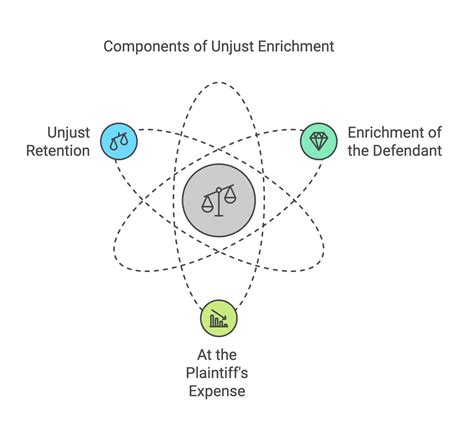
The concept of "bezdôvodné obohatenie" (unjust enrichment) historically refers to situations where one party has received a benefit without a legal justification, often stemming from a mistaken payment or performance. A key principle for distinguishing unjust enrichment from other legal claims, including compensation for damages, is the absence of an existing legal relationship between the parties or a violation of a legal duty. However, in the context of an unauthorized structure, there is a clear violation of property rights.
Some legal interpretations argue that the financial gain of the building owner, derived from using the landowner's property without permission, should be classified as unjust enrichment. This is based on the principle that the landowner has been deprived of the potential use or income from their property, and the building owner has benefited from this deprivation without a legal basis. This perspective often draws parallels with situations where a lease agreement is declared invalid, and the claim for compensation is pursued as unjust enrichment. The underlying idea is to restore a state of equitable balance between the parties.
Conversely, others view this gain as a form of "škoda" (damage), specifically "ušlý zisk" (lost profit). This classification implies that the landowner has suffered a loss because they were prevented from utilizing their land in a manner that would have generated income, such as through leasing it to a third party or engaging in other profitable activities. To claim damages for lost profit, the landowner would typically need to prove that they would have indeed generated such profit had the unauthorized structure not been present. This can be a challenging evidentiary burden.
The distinction can be further nuanced by considering the nature of the claim. If the claim is seen as arising from a breach of a legal obligation, it leans towards damages. If it is viewed as a consequence of a benefit conferred without a legal cause, it points towards unjust enrichment. A crucial factor in this distinction often lies in whether there has been a violation of a legal duty by the enriched party. In cases of unauthorized construction, the mere presence of the structure on the land can be seen as a continuous violation of the landowner's property rights.
The legal scholar Martin Maliar highlights the complexity, stating that objective law cannot be based on subjective feelings or the way a lawsuit is framed. He notes that unjust enrichment has historically been associated with the "condictio indebiti" (a claim for the return of something not owed). The distinction from damage, in his view, lies in the absence of a breach of a legal obligation by the enriched party. He speculates that unjust enrichment in this context might serve as a supplementary legal ground, driven by the principles of compensatory justice.
Martina Hartmannová emphasizes that the core issue is the impossibility for the landowner to use their property due to the presence of the structure. The building owner, in turn, is using the land. Legally, this is considered enrichment through performance under § 458(1) of the Civil Code, for which monetary compensation is provided. She also points out that pursuing a claim for damages might be difficult if the building owner can prove no breach of duty or can exculpate themselves by demonstrating lack of fault. In such scenarios, unjust enrichment appears to be a more fitting legal avenue.
Prescription Periods for Claims
The question of whether the right to claim compensation for the use of land is subject to prescription, and if so, how it applies, is another area of legal debate. Prescription periods are designed to ensure legal certainty and prevent claims from being brought indefinitely.

One perspective is that the entire right to claim compensation is subject to prescription as a whole. This means that if the landowner does not assert their claim within the statutory period from the moment the unauthorized use began or from when they became aware of it, the claim becomes unenforceable.
Another viewpoint, often associated with the concept of unjust enrichment, is that the right to claim compensation accrues incrementally. If unjust enrichment arises daily from the continued unauthorized use of the property, then the prescription period would also run incrementally for each day of enrichment. This means that a landowner could potentially claim compensation for a period preceding the full statutory limitation, as long as each individual day's enrichment falls within the prescription period.
Martin Maliar argues for the prescription of the claim from the moment the facts giving rise to the landowner's damage or loss arose, emphasizing the need for legal certainty. He distinguishes between a restitutory claim (which may not be subject to prescription) and a derivative, obligation-based claim (which he terms "reparatory"), suggesting the latter should be subject to prescription as a whole.
Conversely, Martina Hartmannová, reasoning from the perspective of unjust enrichment, believes the claim accrues daily, and thus the prescription also occurs gradually. She draws a parallel with the prescription of damages for lost profit, which she also views as accruing incrementally.
The provided text also mentions a two-year prescription period for the right to claim unjust enrichment, starting from the day the landowner becomes aware of the enrichment and the person who benefited. However, it also notes that the claim is extinguished at the latest three years after the enrichment occurred. Crucially, courts only consider prescription if it is raised as a defense by the user of the property. This highlights the importance of timely action by the landowner.
The Role of Section 135c of the Civil Code and Judicial Intervention
Section 135c of the Slovak Civil Code provides a mechanism for resolving situations where a building is erected on someone else's land. It allows for various outcomes, including the removal of the structure, its transfer to the landowner's ownership (for compensation), or the establishment of a real burden (vecné břemeno) in favor of the building owner, again for compensation.

The debate often centers on whether judicial intervention under Section 135c is the exclusive remedy for resolving the conflict between the landowner and the building owner. Some argue that forcing the parties into a legal relationship through a court decision, especially when it involves establishing a real burden for compensation, might not always be the most equitable or appropriate solution. The concern is that the compensation awarded might be a one-time, relatively low sum, which may not adequately reflect the ongoing use of the land. There is also a question of how such compensation would be indexed over time, similar to the issues faced with regulated rent.
The alternative of establishing a real burden that involves regular, perhaps annual, compensation is also considered. This would provide a more continuous flow of income to the landowner and reflect the ongoing use of their property.
Kristián Csach, however, does not see a fundamental problem with these situations being litigated, suggesting that such matters are commonly brought before the courts. He views "usurpatio" (unlawful appropriation) as a form of unjust enrichment, analogous to using a famous person's image for advertising without permission. While acknowledging that the division of ownership can be an undesirable situation, he questions the fairness of penalizing a landowner solely because their land is occupied by someone else's structure, especially if they did not consent. He believes a negative claim against the user of the building and the unauthorized user of the land should exist. He suggests that this does not necessarily force parties into a legal relationship but rather resolves the spatial and temporal conflict of their rights, akin to neighborly rights. He is open to the analogical application of principles governing neighborly relations and discussions about when a landowner's exercise of rights might be considered inadmissible due to good morals or extortion.
Practical Considerations and Legal Advice
The provided text also includes various practical scenarios and legal advice related to real burdens and property use. These examples illustrate the real-world complexities that arise from these legal concepts.
One common scenario involves establishing a "vecné bremeno doživotného užívania" (real burden of lifelong use) for a parent, ensuring their right to reside in a property even after it has been gifted to a child. This is typically done through a written contract and registered in the land registry. Such a burden guarantees the right to use the property until death, preventing the new owner from evicting the beneficiary.
The text also addresses situations where the beneficiary of a lifelong use burden might not be living in the property. In such cases, the legal interpretation can become more nuanced, particularly regarding the obligation to contribute to the property's maintenance costs. Generally, if the beneficiary is not actively using the property, their obligation to contribute might be limited, but the specific terms of the agreement and legal precedents play a significant role.
Furthermore, the text touches upon the possibility of "vydržanie" (adverse possession), where continuous use of a property for a statutory period (typically 10 years) can lead to the acquisition of ownership rights, provided the possession is "oprávnená" (justified or lawful) and the possessor is in good faith. This underscores the importance for landowners to actively manage and monitor their properties to prevent such claims.
In cases where a property owner wishes to sell a property burdened by a lifelong use right, the burden generally remains with the property and transfers to the new owner. The consent of the beneficiary of the lifelong use right is typically not required for the sale itself, but the new owner must respect the existing burden.
The legal advice provided consistently emphasizes the importance of clear, written agreements and prompt action to protect one's property rights. Consulting with legal professionals is recommended to navigate the complexities of property law, particularly when dealing with real burdens, unauthorized construction, and claims for compensation. The distinction between merely allowing someone to live in a property and having a legally binding "vecné bremeno" is crucial, as is understanding the associated rights and obligations for both the property owner and the beneficiary of the burden.
The scenarios presented highlight that while the law aims to provide a framework for resolving property disputes, the application of these laws often depends on the specific facts of each case, the precise wording of agreements, and the interpretation of judicial precedents. The ongoing discussions among legal professionals underscore the dynamic and often debated nature of these legal issues within the Slovak legal system.